Benthic Transect (Ecosystem: Reef/Seagrass)

📏 Benthic Transect (Ecosystem: Reef / Seagrass)

Capture benthic cover along transect lines using Point, Line, or Chain Intercept methods. Works for coral reef and seagrass sites.

What you need first

  • Organisation and Project (Org, Project)
  • A Site set to Coral Reef or Seagrass with geometry (Site)
  • A Survey Plan for Benthic Transect with transect lines (Plan)
  • Decide your method (PIT/LIT/CIT) and interval rules

Benthic plan selection Screenshot: Selecting a Benthic Transect plan

Field workflow

  1. Lay or navigate the transect lines from the plan (length defined in plan/metadata).
  2. Choose the method:
    • PIT: record the substrate/cover at fixed intervals along the line.
    • LIT: measure the length of each benthic category intercepted.
    • CIT: similar to LIT but uses a chain to conform to relief.
  3. For each point/segment, record the benthic category/taxon per your protocol.
  4. Note conditions (depth, visibility, current) and any deviations.

Data entry in MariMap

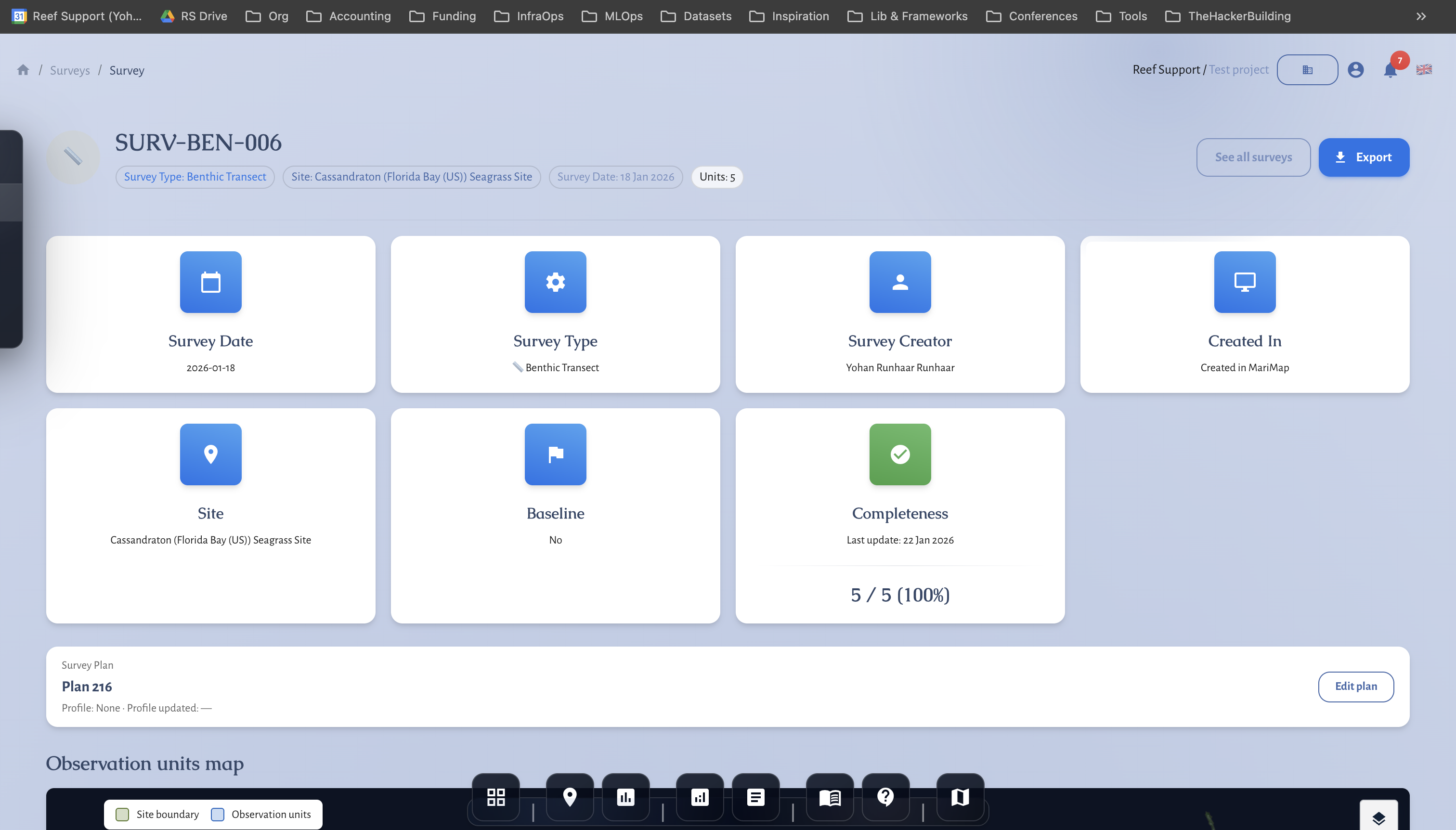
  1. Create a survey from the Benthic Transect plan (https://marimap.com/app/surveys/new (opens in a new tab)).
  2. Confirm Site, Date, Survey ID, and pick the Method (PIT/LIT/CIT).
  3. If PIT, set the interval (m) (app enforces a safe minimum based on transect length).
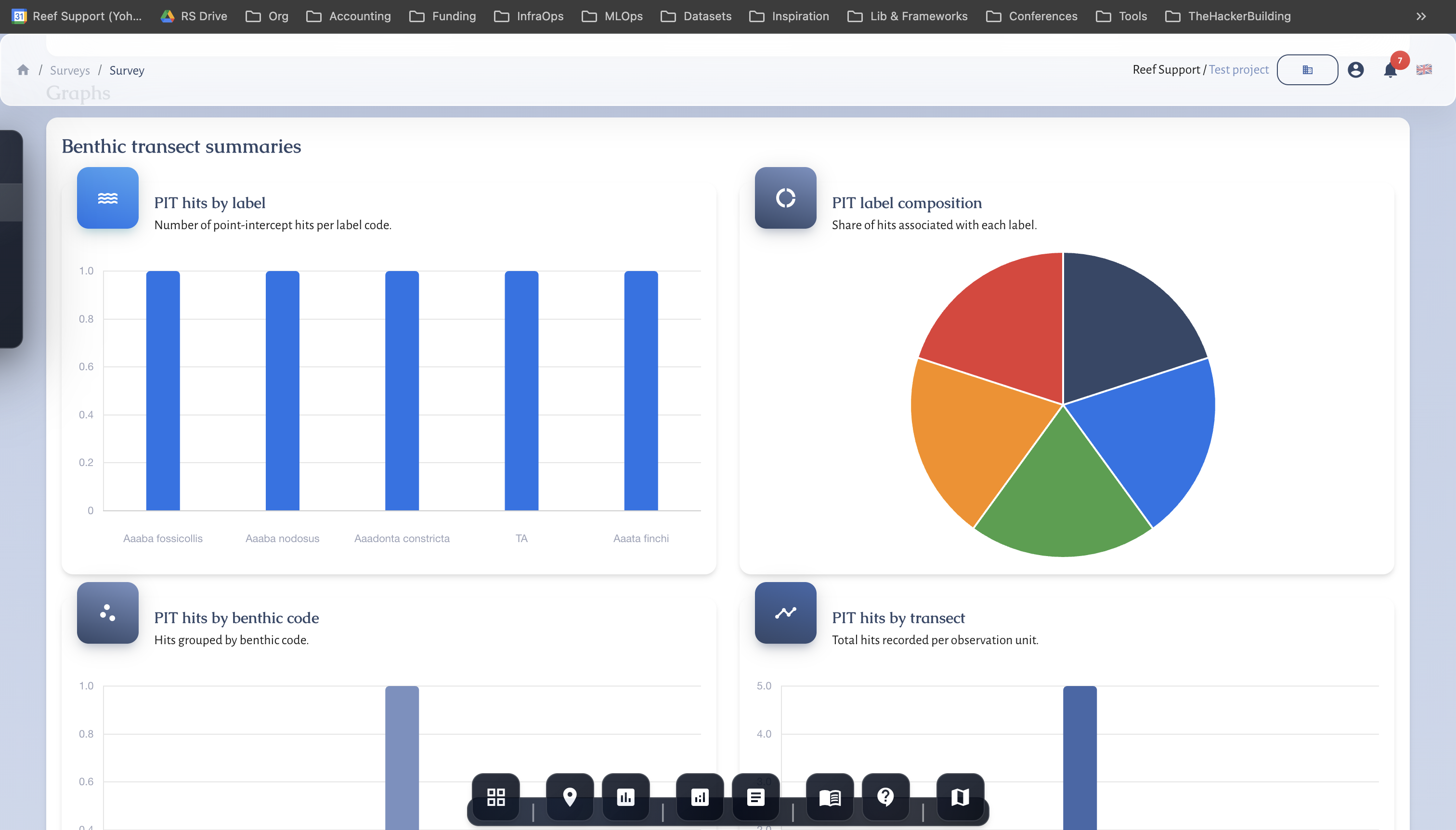
  4. Enter benthic observations per transect/point and save.

Benthic method step Screenshot: Method step with PIT/LIT/CIT options and interval input

Tips for good data

  • Use the same transect layout and interval each visit.
  • For PIT, keep interval spacing consistent; for LIT/CIT, measure lengths carefully.
  • Standardize benthic categories across teams; include notes for unusual substrate/biota.