Fish Belt Transect (Ecosystem: Reef/Seagrass)

🐟 Fish Belt Transect (Ecosystem: Reef / Seagrass)

Count fish along belt transects (lines) with consistent width and length. Works for coral reef and seagrass sites.

What you need first

  • Organisation and Project (Org, Project)
  • A Site set to Coral Reef or Seagrass with geometry (Site)
  • A Survey Plan for Fish Transect with transect lines (Plan)
  • Agreed belt width and any quadrat size (if applicable)

Fish transect plan selection Screenshot: Selecting a Fish Belt Transect plan

Field workflow

  1. Swim the planned transect lines at steady speed.
  2. Keep a consistent belt width (e.g., 5 m) on one or both sides.
  3. For each species/group:
    • Record Species (or genus if unsure).
    • Add Count; be consistent for schools.
    • Optionally note Size estimate or quadrat details if used.
  4. Note conditions (visibility, current, depth).

Data entry in MariMap

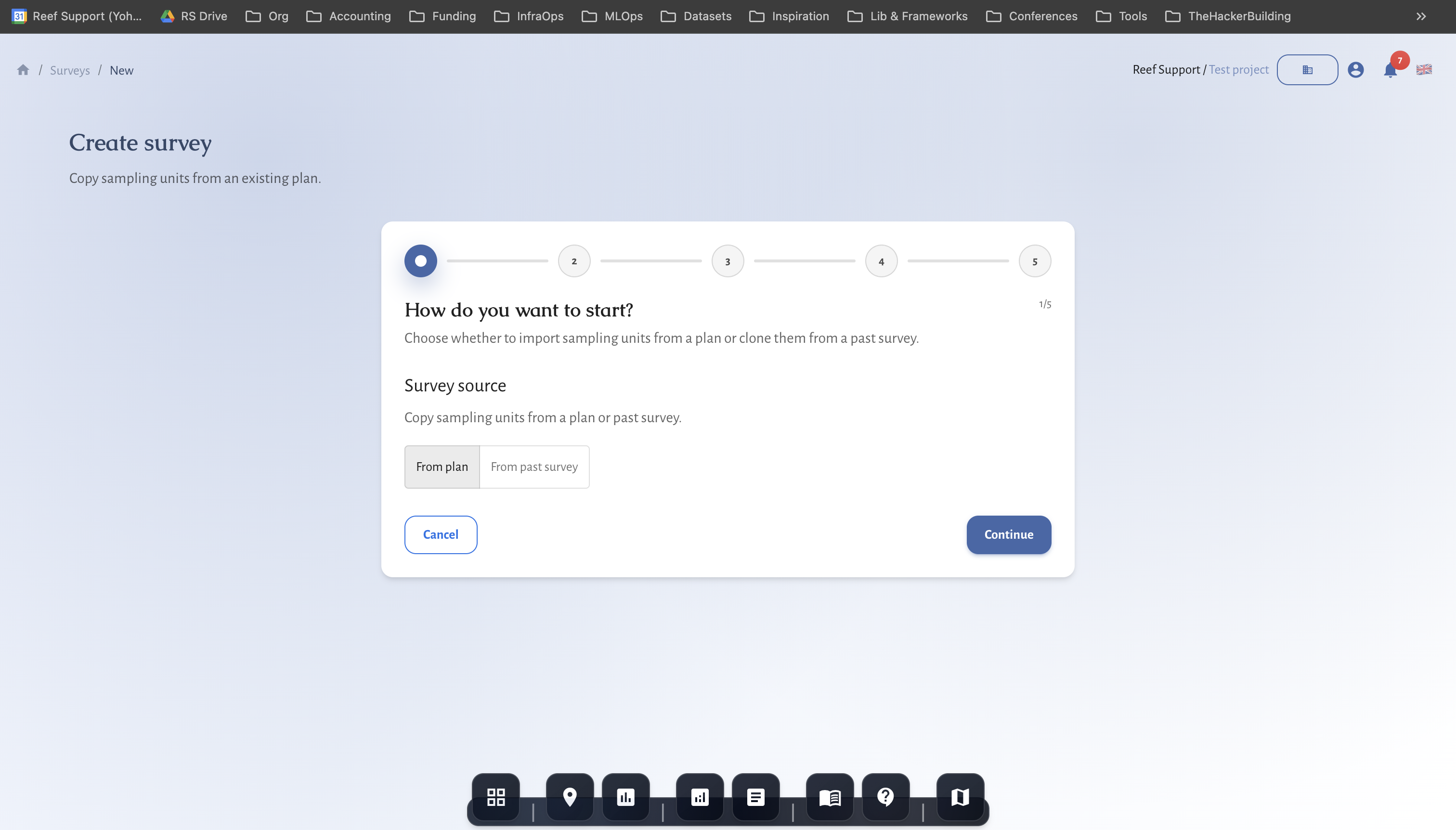
  1. Create a survey from the Fish Transect plan (https://marimap.com/app/surveys/new (opens in a new tab)).
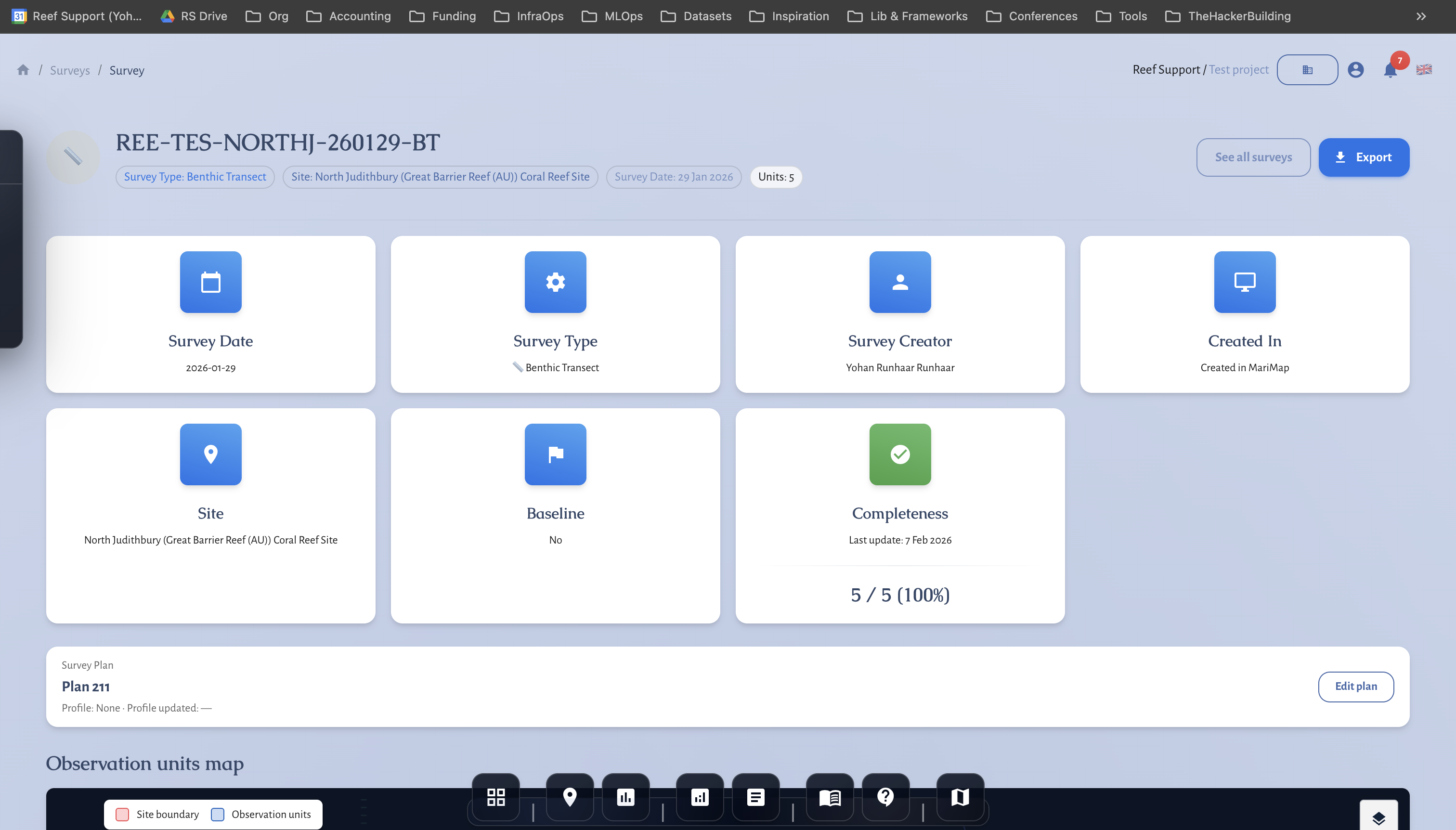
  2. Confirm Site, Date, Survey ID.
  3. Set Belt width (m) and optional Quadrat size (cm) if you use them.
  4. Enter fish observations per transect and save.

Tips for good data

  • Keep belt width and swim speed consistent across dives and observers.
  • Use the same transect lines each survey for comparability.
  • If unsure on ID, log genus and note key features; refine later.